Music blogs for new artists: how to pitch, get featured, and make it count
Find the right music blogs for new artists, learn how to pitch them effectively, and turn press coverage into fan data you keep.

Music blogs for new artists remain one of the most underrated tools in an independent release strategy.
When 120,000 tracks hit streaming platforms every day (AMW, 2026), algorithmic discovery is increasingly unpredictable, and editorial coverage from a human writer is one of the few signals that carries inherent credibility.
A feature on a genre-specific blog does something a playlist placement cannot: it tells a story.
That story reaches industry contacts, booking agents, and new listeners simultaneously, and it stays indexed online long after the release cycle ends.
Why blog coverage still matters for emerging artists
Press coverage is not a direct stream driver, and treating it as one leads to disappointment. What blog features do well is build a documented public record.
In practice, a small number of features signals activity, but once an artist stacks multiple features, they start to look established. At scale, consistency becomes undeniable
That compounding press history becomes leverage in conversations with venues, playlist curators, labels, and sync supervisors - all of whom search an artist's name before responding to a pitch.
The SEO value alone justifies the effort. Each blog feature creates a backlink from a real editorial domain pointing to the artist's streaming profiles and website.
Those backlinks accumulate authority over time, making the artist easier to find organically and strengthening any Wikipedia or verification applications they pursue.
What music blogs consistently deliver for new artists:
Credibility with gatekeepers: a curator or booking agent who searches an artist and finds multiple editorial features responds differently than to someone with only social followers
Permanent press record: unlike a social post or playlist add, a published feature stays indexed and searchable indefinitely
Targeted reach: readers of genre-specific blogs are self-selecting music enthusiasts who are genuinely open to discovering new acts, not passive algorithm-fed listeners
Content for repurposing: a published review or interview generates pull quotes, social proof assets, and EPK content that works across every other channel the artist uses
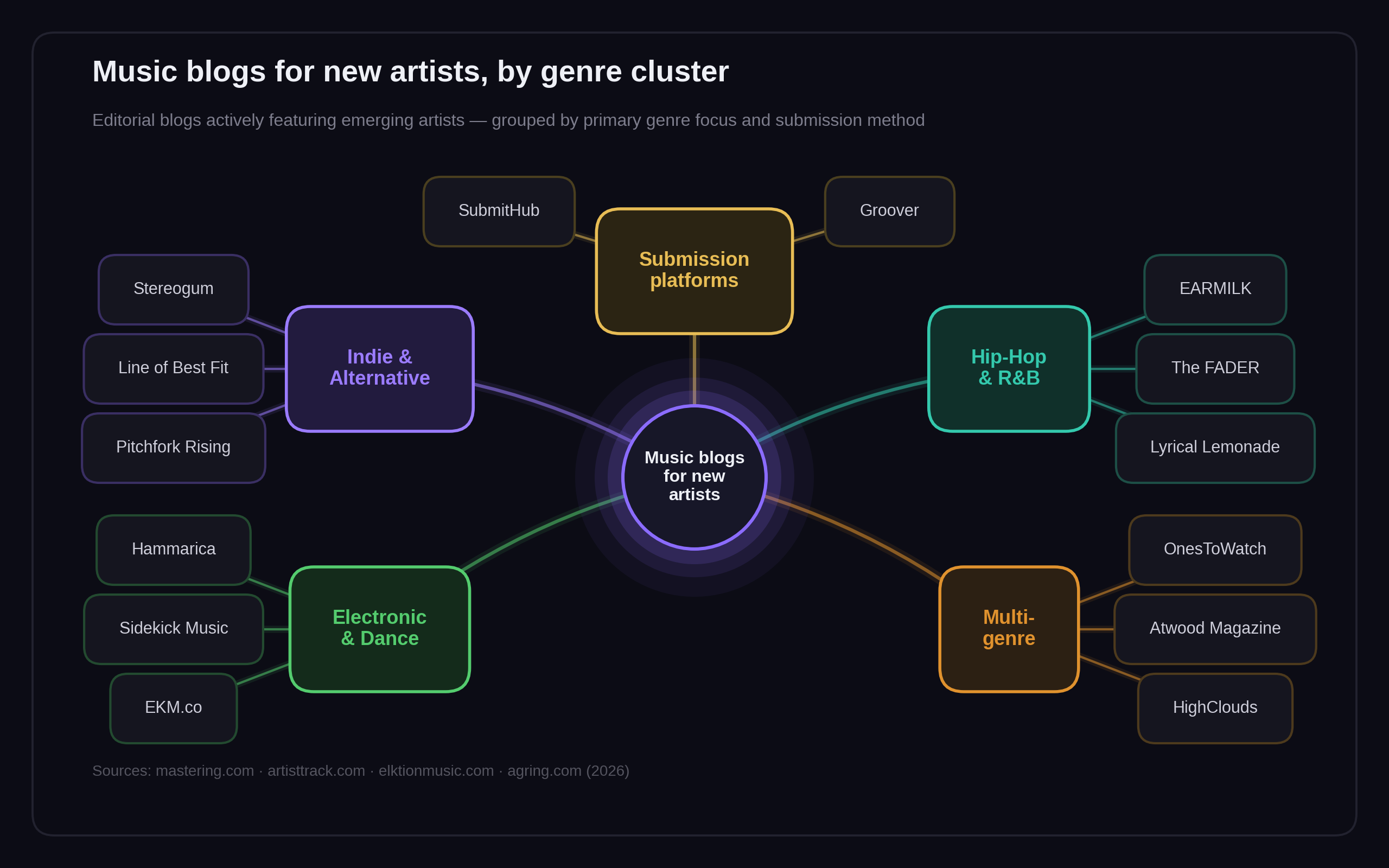
Different blogs serve different genre ecosystems, and pitching outside your lane is almost always ignored.
The map below groups the most active editorial blogs by primary genre focus, including submission-platform aggregators that span all genres. Use it to build your target list before drafting a single email.
The blogs worth targeting and how to find the right ones
Genre alignment is the single most important filter in building a blog target list. A blog that covers ambient folk will not feature hip-hop regardless of pitch quality.
The starting point is always researching five to ten artists at a similar career stage in the same genre, then searching their names alongside "premiere," "review," or "interview" to surface which blogs have covered acts like them.
Blogs with active open submission processes
Several editorial outlets actively seek music from emerging artists and publish clear submission guidelines.
These are the most actionable targets for independent artists without label PR representation.
A&R Factory accepts submissions across most genres and reaches an industry-specific readership that includes label owners, managers, and sync licensing firms. A feature there lands in front of gatekeepers rather than general audiences.
Atwood Magazine runs long-form artist profiles focused on storytelling, making it well-suited for artists with a compelling narrative angle — debut releases, genre-blending sounds, or distinctive personal histories. They accept direct submissions via their website.
EARMILK covers hip-hop, alt-R&B, and electronic music and accepts submissions through SubmitHub. Their readership skews toward tastemakers and early adopters in those genres.
HighClouds focuses on indie and alternative pop with a strong emphasis on emerging acts. Their editors respond to pitches that lead with a concise, distinctive description of the music rather than a résumé of career milestones.
The Line of Best Fit is a UK-based outlet with strong credibility in indie, alternative, and international music scenes. Their submission bar is higher, but a feature carries significant weight across both US and European markets.
Submission platforms as a starting point
For artists without existing press contacts, SubmitHub and Groover both serve as directories and submission tools simultaneously.
SubmitHub's filterable database lets artists search curators and blogs by genre and approval rate before spending a credit.
Groover guarantees a response within seven days or refunds the submission cost, making it useful for collecting feedback even when placement is not secured.
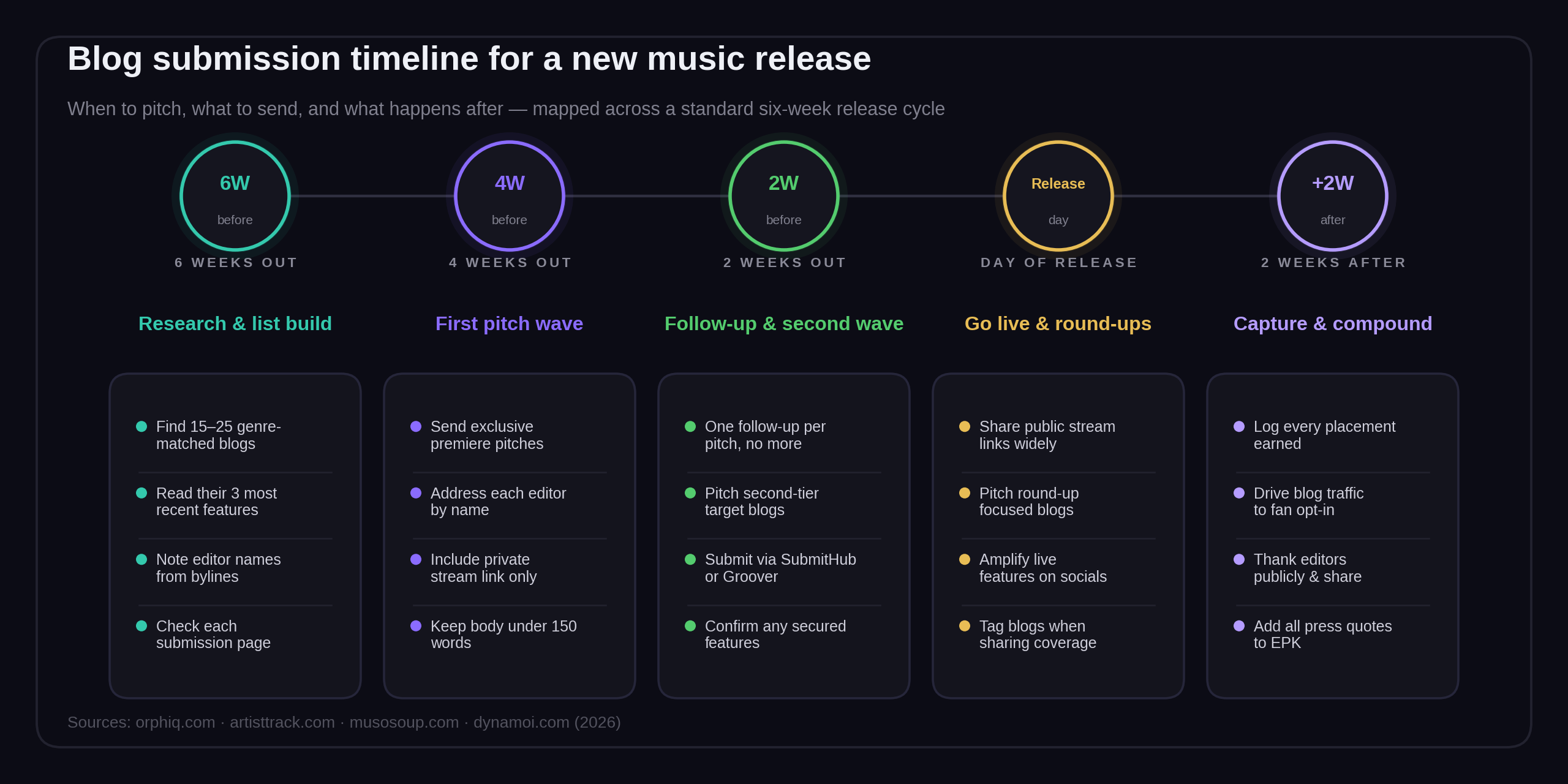
Timing is the most common mistake in blog pitching. A track submitted on release day is old news to most editors.
The timeline below maps the five stages of a standard blog campaign across a six-week pre-release to two-week post-release window.
How to write a pitch that gets read
Blog editors receive hundreds of submissions per week and make decisions in seconds. The pitch itself has one job: make opening the track feel worth the time.
That requires three things - a relevant subject line, a single-paragraph description of the music, and a working stream link with no login required.
The subject line format that consistently performs is: [Genre] Premiere: [Artist Name] - "[Song Title]".
The word "premiere" signals exclusivity and gives the editor a clear reason to open before the release window closes. If the artist is not offering exclusivity, "Review Opportunity" performs similarly.
What the pitch body must include:
Two sentences maximum on who the artist is: where they are from, what they sound like, and one relevant reference point (similar artists, regional scene, prior releases with measurable traction)
One sentence on the track: mood, production style, or lyrical theme; no superlatives, no adjectives like "groundbreaking" or "soulful masterpiece"
A private streaming link: SoundCloud private link or an unlisted YouTube link; never an attachment, never a Dropbox or Google Drive file that requires login
Release date: editors need to know the window so they can schedule coverage before the track goes public
Follow up exactly once, seven to ten days after the initial pitch. If there is no response after the follow-up, the answer is no, and following up again damages the relationship.
Turning blog coverage into something that lasts
A blog feature earns attention in a specific window. What happens in that window determines whether the coverage compounds or evaporates.
Most artists share the link once on social media and move on. The teams that extract lasting value from press coverage treat each feature as a conversion opportunity - a chance to capture the readers that feature surfaces.
Several actions compound the return on a single blog placement:
Drive feature traffic to a pre-save or fan opt-in page rather than directly to Spotify, so the attention converts into contact information the artist controls
Repurpose the press quote immediately across social profiles, the EPK, and future pitch emails to larger outlets, establishing a credibility chain that grows with each placement
Build a press database that logs every submission, response, and placement so each release starts with a better-targeted list than the one before
This is where blog coverage connects directly to the broader release infrastructure.
Fanaura captures fan data at every touchpoint - including traffic driven from editorial features - building profiles that tell the artist who engaged, when, and how.
Press earns the attention. The system captures who showed up. If that capture layer is missing from the current setup, Fanaura is built to add it.
Take the next step in your music career
Build your career with a marketing team behind you.
Create your account and start planning your next release with Aura Chat.